Product news: GPT-5.6, Claude Opus 5 and Gemini study notebooks make task matching an educational design decision
OpenAI, Anthropic, Google for Education
AI Product and Learning Report
500-word summary

Listen to the product news report
Audio summary
This compact product-news report follows a practical change in AI adoption: product choices are increasingly presented as a portfolio rather than a single assistant. OpenAI's July 30 update lowers the price of GPT-5.6 Luna and Terra and adds a faster mode for Sol. Anthropic's July 24 Claude Opus 5 launch positions a more capable model for sustained coding, analysis and professional work. Google's June 25 education announcement introduces Gemini study notebooks, which use a learner's goal and uploaded materials to build diagnostic quizzes, short lessons, progress tracking and later adjustments. Together, the announcements make model selection and workflow design part of educational practice.
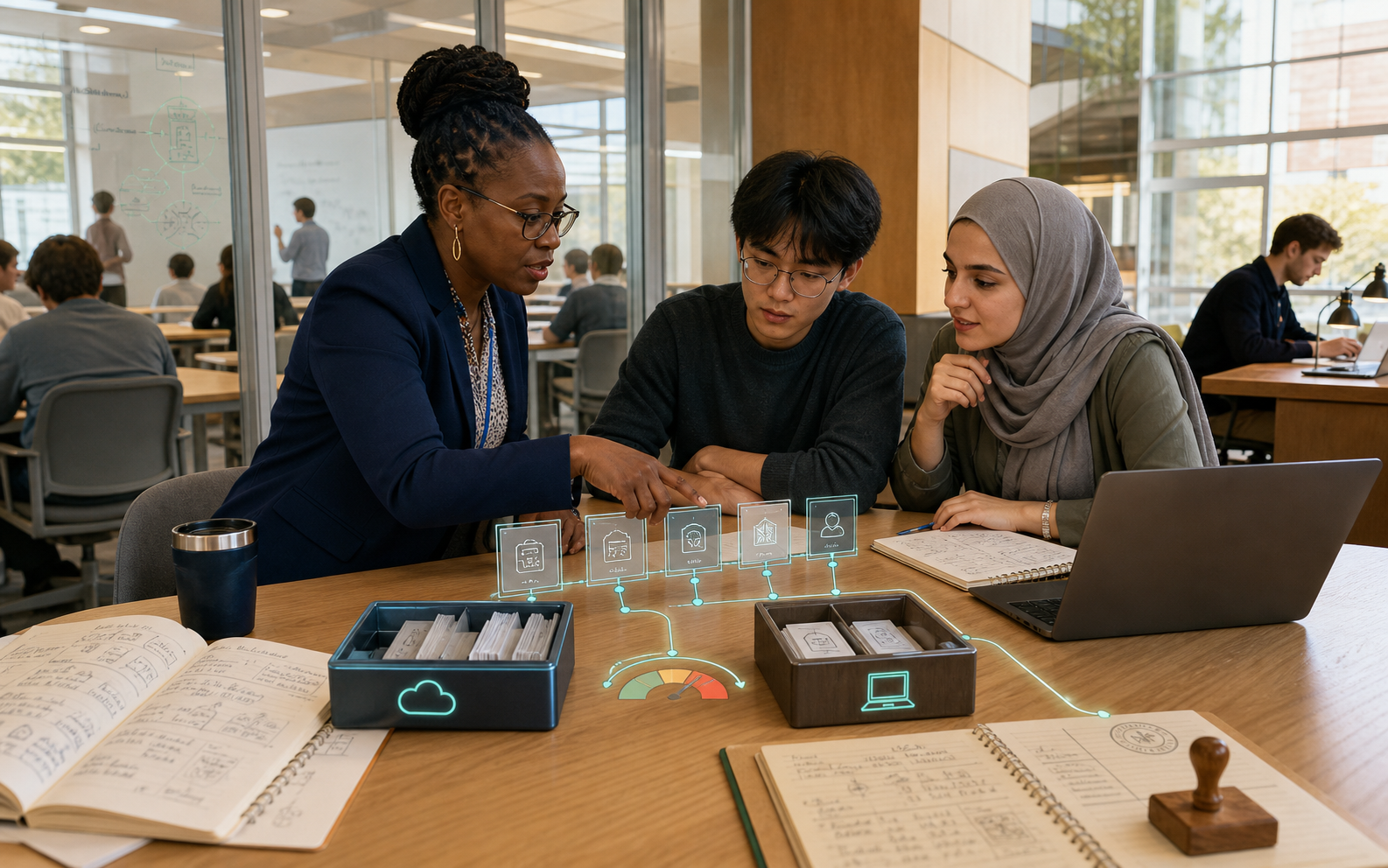
OpenAI's announcement is mainly about price, speed and deployment options. Luna is positioned as a lower-cost, high-volume model; Terra as a balanced everyday model; and Sol as a higher-capability option with a faster premium mode. An education team could map those differences to work instead of treating all prompts equally: routine formatting or tagging may warrant a constrained low-cost workflow, while a consequential curriculum analysis may warrant a stronger model, source checking and a human sign-off. Lower cost can make useful experiments feasible, but it can also make it easier to automate poor decisions at scale.
Anthropic describes Opus 5 as a stronger option for long-running agents, coding and knowledge work, with configurable effort. Its performance claims are vendor evidence, not classroom evidence. The educationally relevant capability is persistence across a complex task: examining a course repository, tracing an error in a learning resource, or proposing revisions while checking constraints. Such work should still have an accountable educator who sets the purpose, checks sources and approves changes. A capable agent can make a weak task appear complete, so institutions need evaluation criteria that include accuracy, privacy, accessibility and learning value.
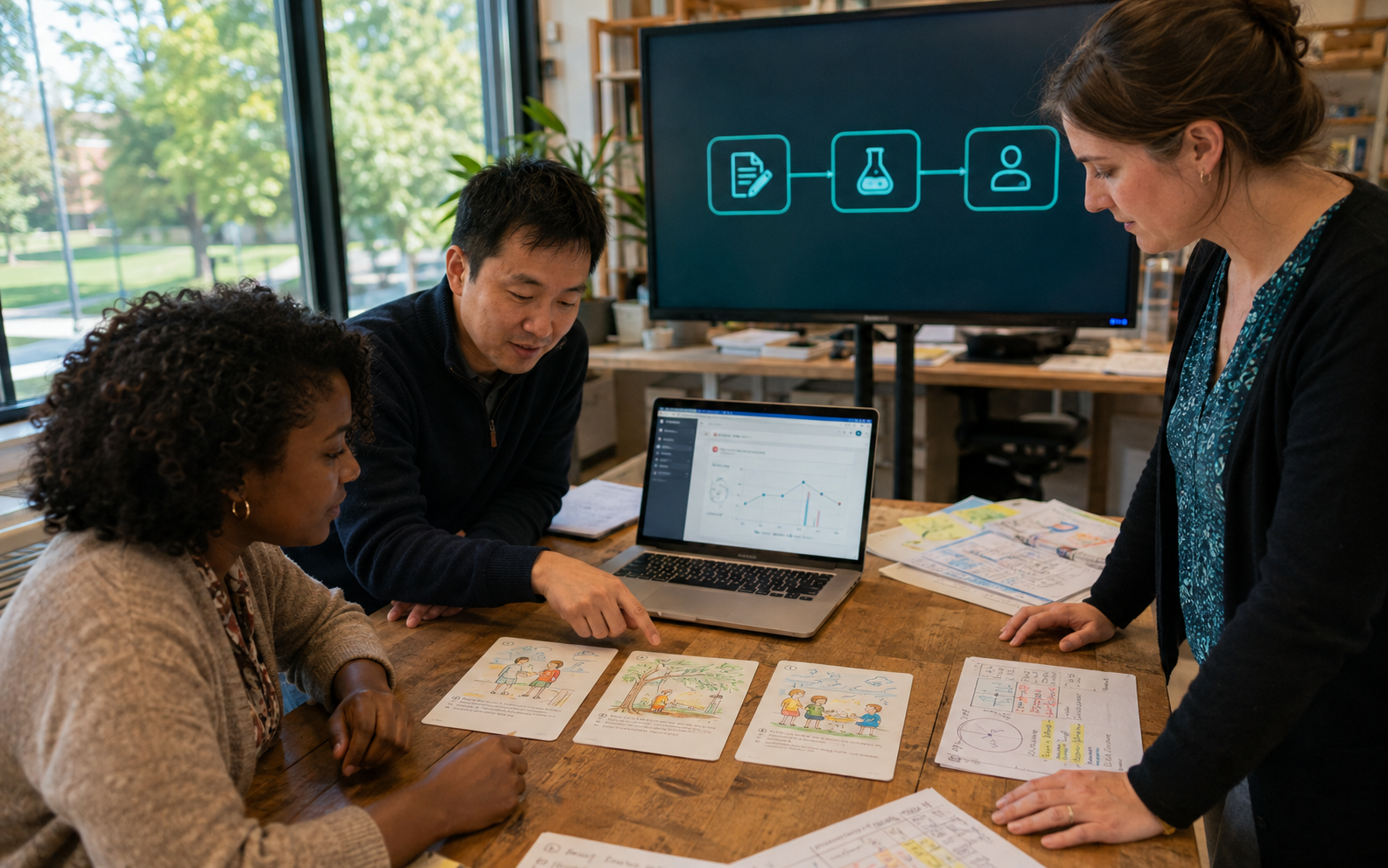
Google's study notebooks make the learner-facing side more explicit. The product announcement says learners can supply class materials, take a diagnostic quiz, receive bite-sized interactive lessons and have the plan update as results change. Google also says the notebooks can connect with NotebookLM and, in coming Classroom workflows, give teachers insight into where additional help may be needed. These are product capabilities and rollout plans, not independent proof of improved outcomes. Schools should ask what data are used, what a recommendation means, what learners can do without the tool and whether teachers can inspect or override the system.
For Hong Kong schools and universities, the common lesson is to specify the learning or work outcome before selecting a model tier or adaptive feature. A pilot can define low-risk tasks, protect student data, state when AI output must be verified, retain student process evidence and compare time savings with quality and independent performance. Cost and speed are useful constraints, not educational objectives. The best workflow is one in which a student, teacher or reviewer can explain why the tool was used, what it contributed and what remained human judgment.