OpenAI product news: ChatGPT Deep Research makes source review part of the learning workflow
OpenAI
AI Product and Learning Report
500-word summary

Listen to the 500-word product news report
Audio summary
This product-news report examines how OpenAI currently positions search and Deep Research in ChatGPT. An April 2026 OpenAI Academy guide distinguishes quick web search from a slower, multi-step process for complex questions. Search retrieves recent facts and links; Deep Research plans an investigation, searches and refines queries, synthesizes information, and produces a documented report with source links.
The distinction matters for education because a single chat interface can conceal very different levels of work. A quick search may be appropriate for locating a recent press release or a specific data point. An open-ended literature question, policy comparison, or institutional decision requires multiple sources, competing explanations, explicit scope, and traceable evidence. OpenAI's guide says Deep Research is intended for the second class of task and may take several minutes while it explores the question.
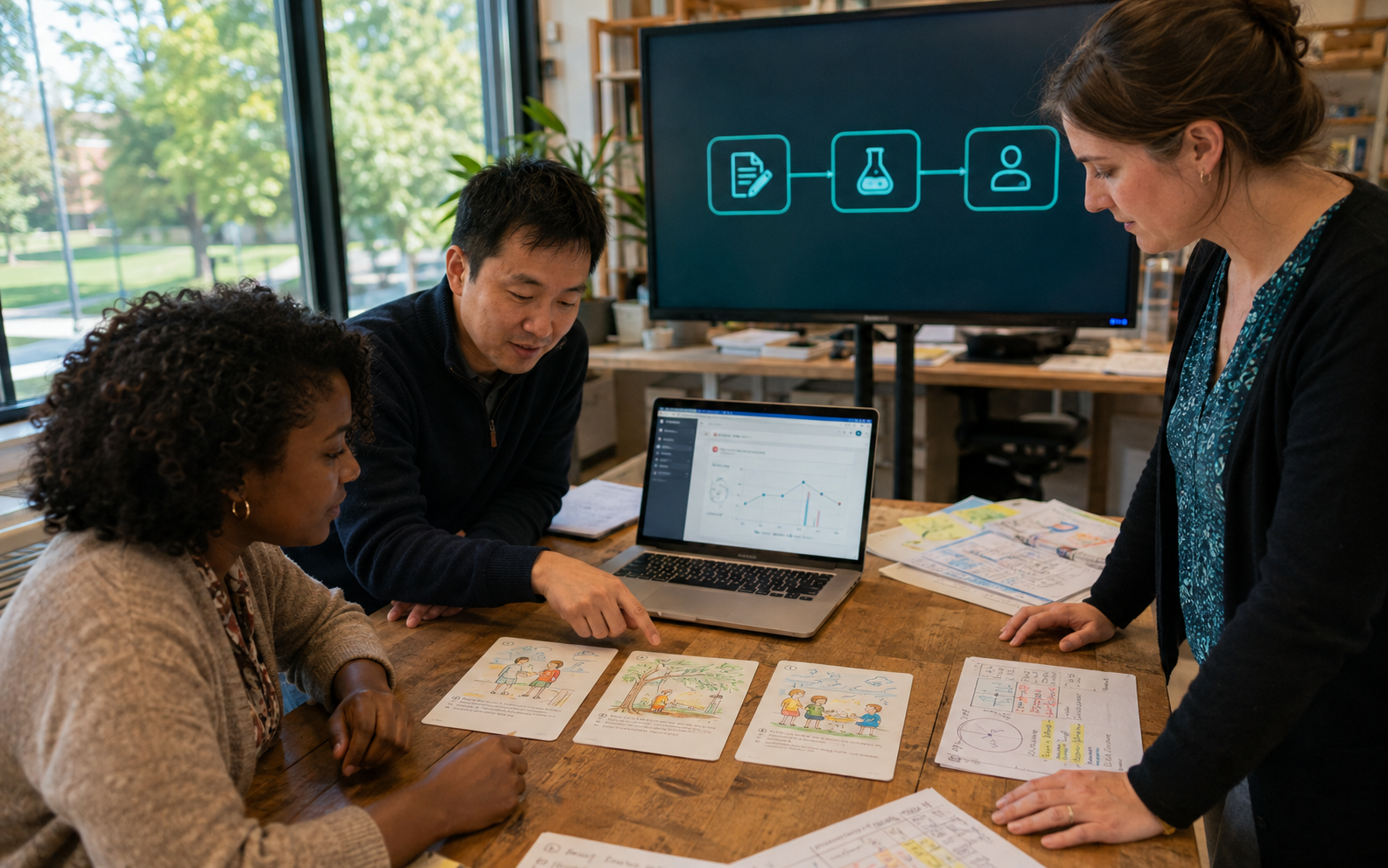
The product can provide a useful scaffold when a learner supplies a clear goal, audience, timeframe, and criteria. A visible research plan can turn an ambiguous prompt into subquestions. Citations can make claims inspectable, and follow-up prompts can expose gaps or competing interpretations. These are workflow affordances, however, not guarantees that the sources are authoritative, complete, or correctly represented.
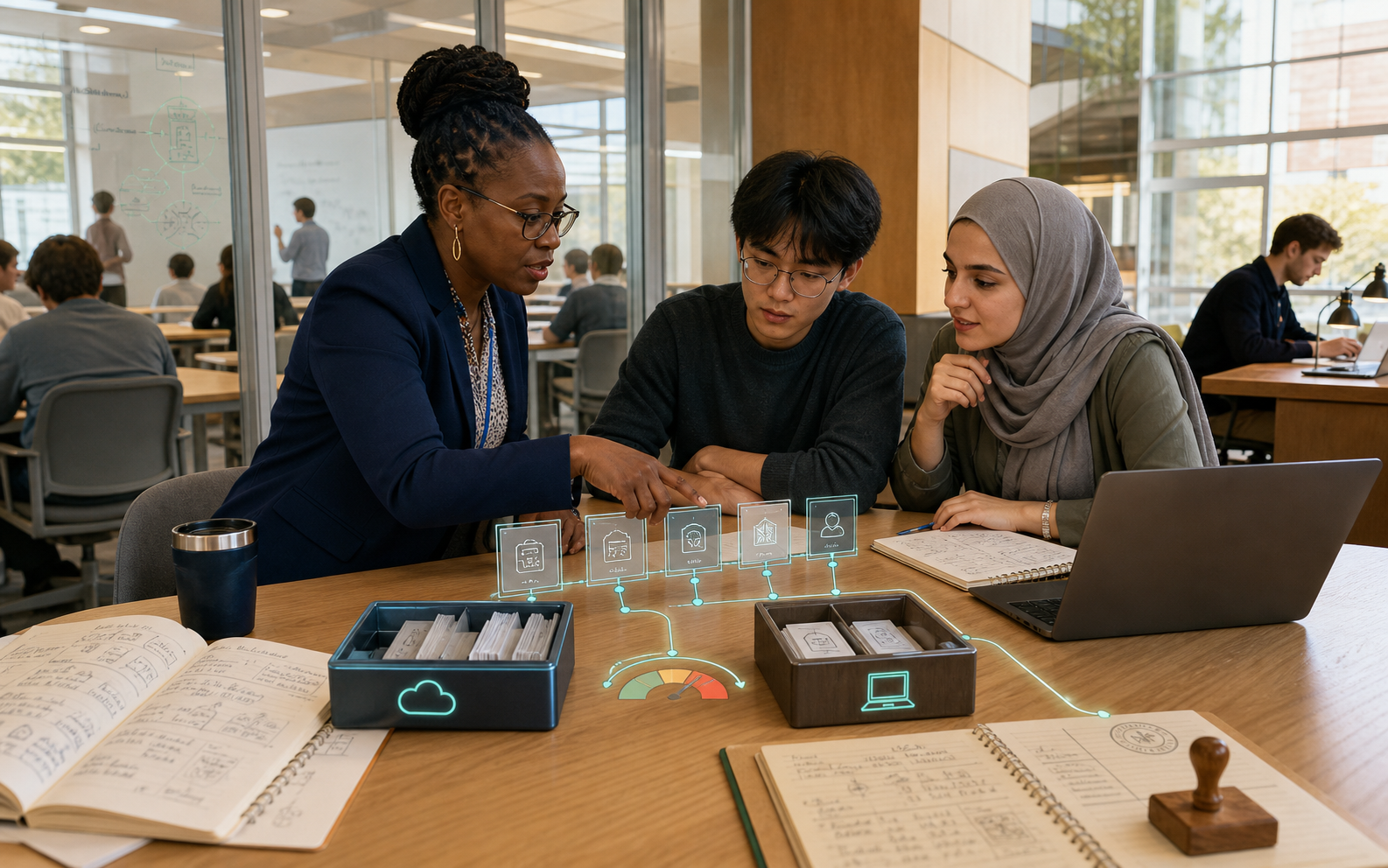
OpenAI explicitly advises users to review linked sources and notes that web search does not replace specialist or subscription databases. That warning is central in academic settings. A cited response can still rely on a secondary summary when a primary paper is available, miss literature outside the public web, or attach a plausible link to a claim it does not support. Citation presence should therefore be treated as an invitation to audit, not as a quality mark.
Assessment design must also account for delegation. If Deep Research chooses the questions, sources, comparisons, and wording, a polished report may reveal little about the learner's understanding. Teachers can preserve evidence of learning by requiring a pre-search question map, a source-selection rationale, an annotated claim-to-source table, notes on excluded evidence, and a final oral or written explanation completed without the tool.
Libraries remain essential. Students should search disciplinary indexes and institutional collections when the public web is incomplete, verify publication and retraction status, follow citations backward, and compare the generated synthesis with the underlying methods and results. Deep Research can reduce navigation cost, but it cannot decide what counts as sufficient evidence for a discipline or assignment.
Privacy and permissions need the same visibility as citations. Learners should not upload identifiable student records, unpublished research, protected assessment items, or confidential partner documents unless the institution has approved the account, data terms, and retention controls. A report should record which uploaded or connected sources the system was allowed to use.
For Hong Kong schools and universities, a strong pilot would compare three conditions on the same inquiry: manual search, standard ChatGPT search, and Deep Research. Evaluate source quality, claim accuracy, coverage, time, correction behavior, and the learner's independent explanation. The goal is not to reward the longest report. It is to determine whether the workflow improves source literacy and judgment.
Deep Research makes documented synthesis easier to produce. Its educational value depends on whether the learner remains responsible for framing the question, checking the evidence, recognizing missing sources, and defending the conclusion. Used that way, the product can support research apprenticeship; used as an invisible report generator, it can bypass it.