Product news: GPT-5.6 Sol Pro and Claude Code's Fable advisor make AI routing part of workflow literacy
OpenAI, Anthropic, Google for Education
AI Product and Learning Report
500-word summary

Listen to the product news report
Audio summary
This product-news report connects three current approaches to routing AI work. OpenAI's GPT-5.6 guidance, updated on August 15, maps models and reasoning levels to plans and products. Anthropic's Claude Code 2.1.232 changes how coding sessions delegate context and consult Fable 5. Google frames Gemini for Education across teaching, learning and institutional work. The common educational issue is whether users can tell which system handled a task, what context it inherited and where human judgment remains necessary.
OpenAI says GPT-5.6 Sol supports complex work across coding, research, science, computer use and design, while Sol Pro is its highest-capability option for difficult or longer-running workflows. Eligible paid ChatGPT plans can choose Medium, High and Extra High reasoning with Sol; Pro uses Sol Pro. Free and Go users instead receive Luna and can select Think for harder questions. Terra, Sol and Luna also have different availability in Work, Codex and the API. OpenAI lists ChatGPT desktop 26.707.30751 and Codex CLI 0.144.0 as minimum versions for GPT-5.6 in Codex.
These product labels are not learning levels. More reasoning can increase time, cost and apparent sophistication without ensuring that a response is correct, curriculum-aligned or educationally helpful. A course using several models should record the selected model, reasoning setting, account or workspace, source materials and any fallback that occurred. Students should still explain and verify the result without relying on the interface label as evidence.
Anthropic's Claude Code 2.1.232 makes context routing more explicit. Subagent forking is on by default: a fork-type subagent inherits the conversation and prompt cache, while ordinary non-teammate agents launched interactively run in the background. Users can mention another named session and send it a message. For organizations with access, Fable 5 is again available as an advisor, with usage-credit consent configured through the model command. The same release strengthens repository trust, credential redaction and managed-policy validation.
For student coding teams and research labs, inherited context can reduce repeated setup, but it can also carry stale assumptions, sensitive details or an incorrect plan into another agent. An advisor can provide a second view, but it is not an independent replication when both systems receive overlapping context. A defensible workflow should identify the parent session, inherited evidence, delegated scope, reviewer and acceptance test, while making any paid-model consent visible.
Gemini for Education supplies the institutional comparison. Google describes one managed environment for educators, students and staff to teach, learn and work: planning lessons and assessments, receiving explanations and writing feedback, and supporting communications, administration and research. It also states that education data is not human reviewed or used to train AI models and offers administrator controls and reporting. Those are vendor-described product boundaries, not independent outcome evidence.
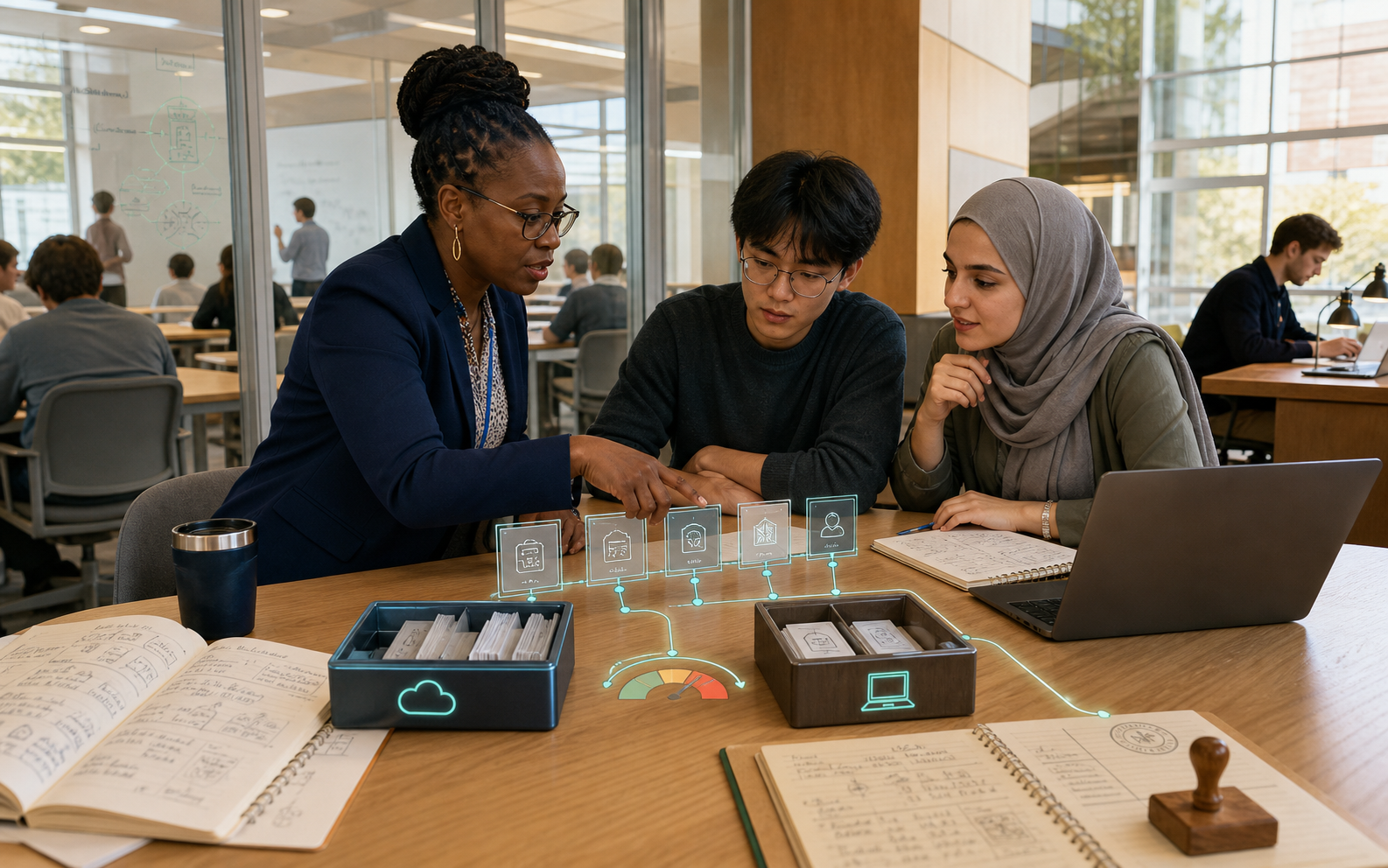
For Hong Kong schools and universities, the practical pilot is a routing ledger. Record which model and reasoning level were used, what context moved between agents, who approved paid or high-capability routes, which institutional data rules applied and how a learner independently checked the output. The opportunity is flexible assistance; the safeguard is keeping routing, provenance, cost and mastery inspectable.