Back to Research News

#generative AI

generative AI

9 papers

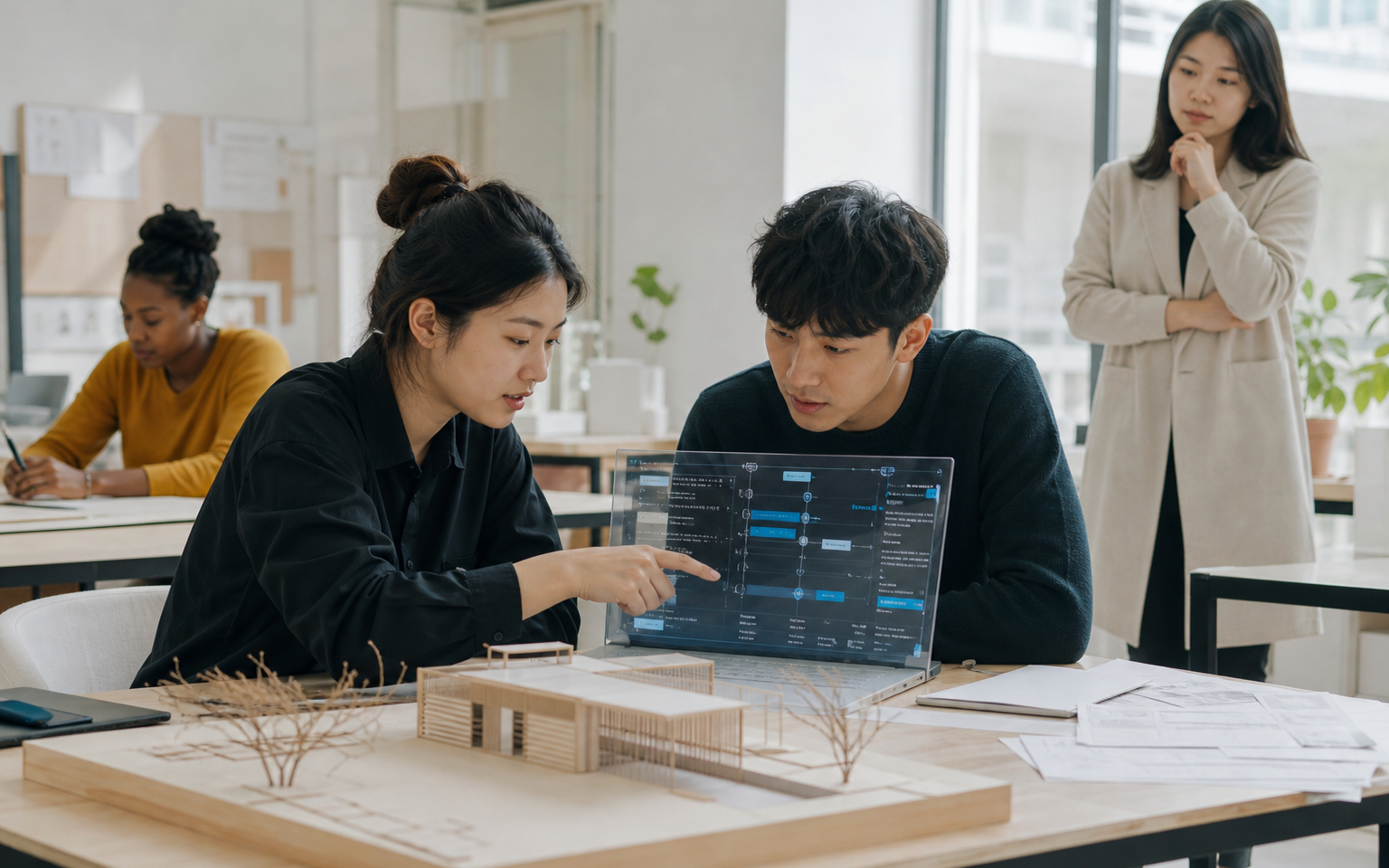
Four diverse adults analyze a business problem with a laptop, charts and an unassisted written follow-up in a workforce-learning laboratory
Journal Paper2026
Journal Paper 54

Generative AI closed three quarters of an education-based performance gap during assisted work, but effort shaped what carried forward

Guillermo Cruces, Diego Fernández Meijide, Sebastian Galiani, Ramiro H. Gálvez, María Lombardi

arXiv working paper

In a preregistered randomized online experiment with 1,174 Argentine adults, GPT-4.1 assistance raised workplace-style problem-solving performance for both education groups and reduced the baseline gap from 0.548 to 0.139 standard deviations. Lower-education participants retained a modest gain after AI was removed, but stronger follow-up performance appeared when intensive assistance was paired with sustained human effort.

generative AIrandomized experimenteducation inequality
Read 500-word summary
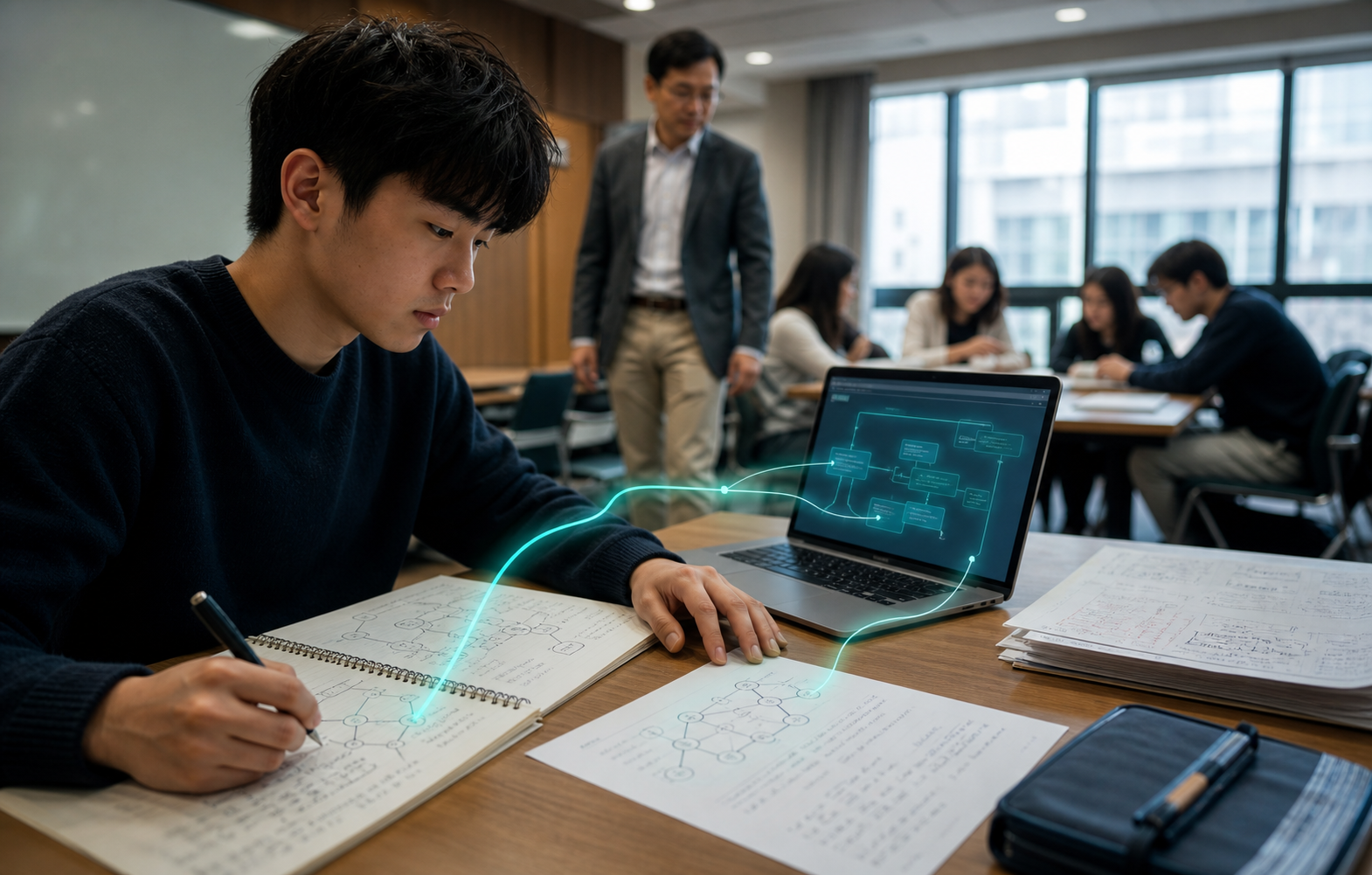
A university student compares an AI explanation with handwritten concept notes while an instructor and peers work in a seminar room
Journal Paper2026
Journal Paper 50

Experimental evidence on the learning impact of generative AI: gains persisted when students used it for explanation rather than automation

Zara Contractor, Germán Reyes

arXiv working paper

A randomized, proctored experiment reported that undergraduate access to off-the-shelf generative AI raised immediate factual and conceptual test performance by 0.27 standard deviations and that the gains persisted one week later. The working paper also finds a consequential usage pattern: students who used AI to explain concepts showed stronger delayed gains than students who used it to automate drafting.

generative AIrandomized experimenthigher education
Read 500-word summary
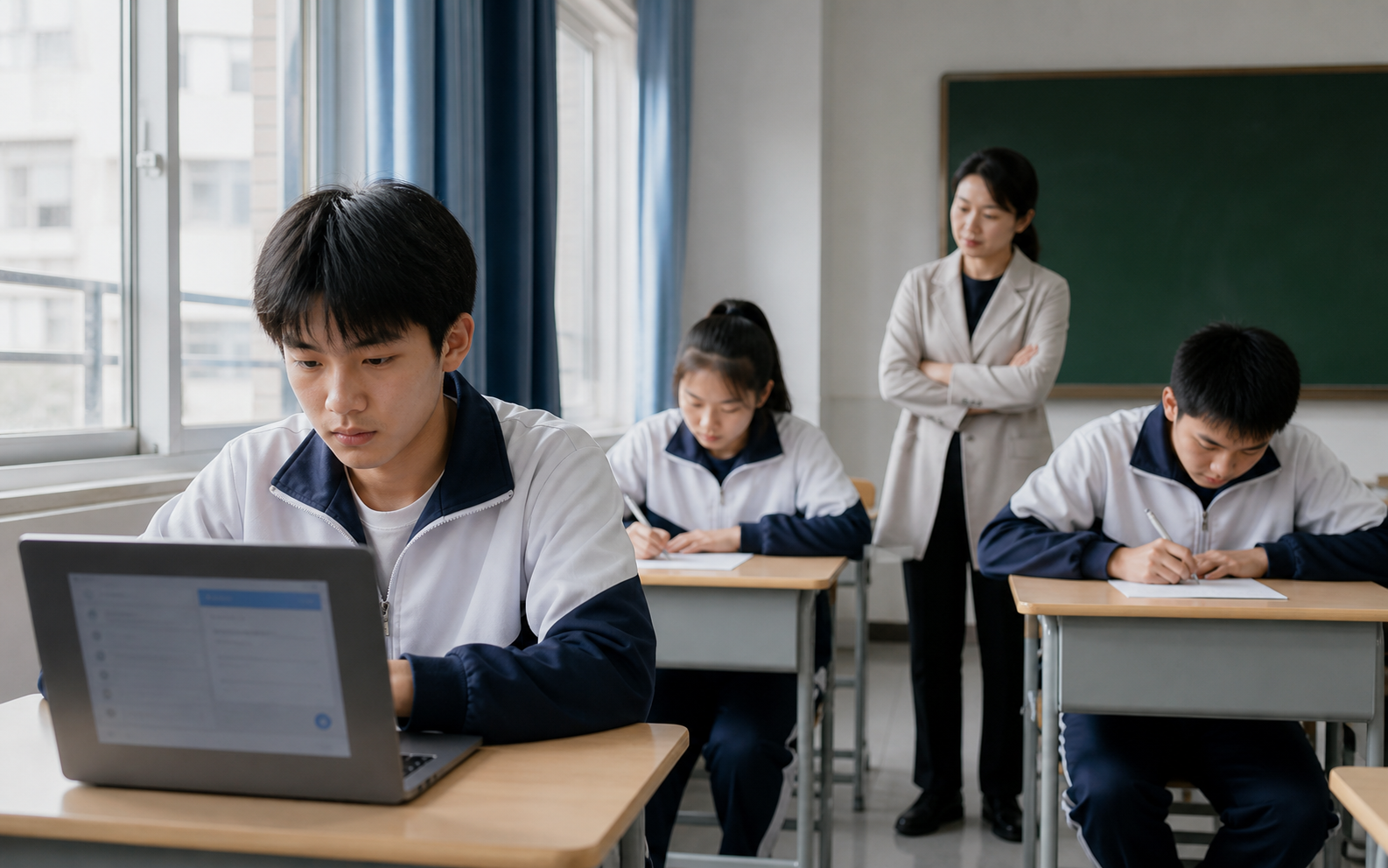
Chinese secondary students complete homework with digital assistance before taking a separate closed-book assessment observed by a teacher
Journal Paper2026
Journal Paper 68

Generative AI adoption was linked to higher homework scores but lower unaided exams in a 26,811-student panel

David Strömberg, Victor Lei, Yanhui Wu

CEPR Discussion Paper No. 21577

A CEPR discussion paper analyzes 30 months of records from 26,811 Chinese students in Grades 7–12. Its difference-in-differences estimates associate generative-AI adoption with homework scores 18% higher and completion time 30% lower, but with substantial declines on closed-book and entrance examinations.

generative AIsecondary educationhomework outsourcing
Read 500-word summary
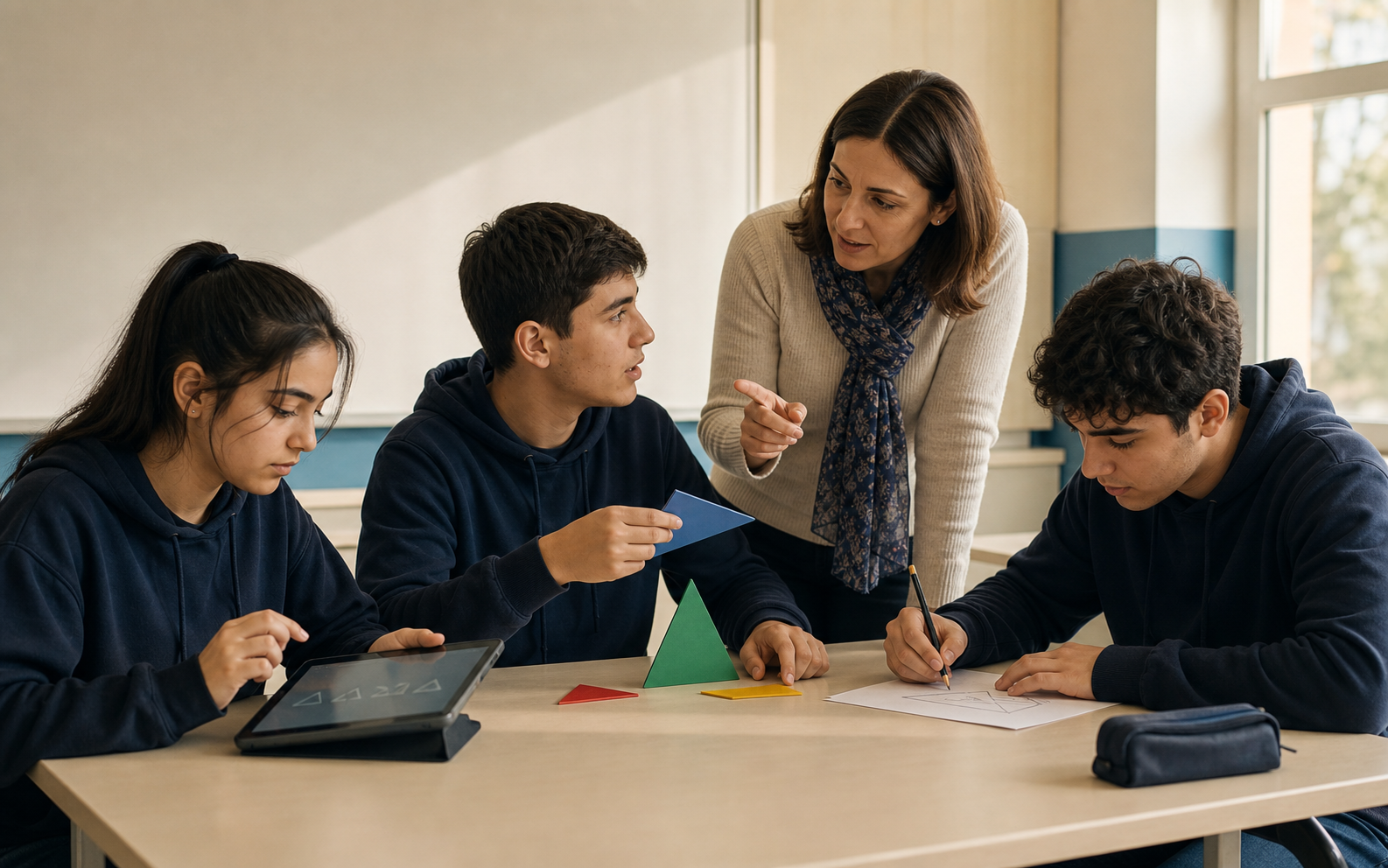
Turkish high-school students solve mathematics problems in three classroom conditions while teachers compare assisted practice with a later unaided test
Journal Paper2025
Journal Paper 56

Unguarded GPT raised assisted practice scores but reduced unaided mathematics performance in a high-school RCT

Hamsa Bastani, Osbert Bastani, Alp Sungu, Haosen Ge, Özge Kabakcı, Rei Mariman

Proceedings of the National Academy of Sciences

In a preregistered cluster RCT with nearly 1,000 Turkish high-school students, a standard GPT-4 interface raised assisted practice performance by 48% but reduced later unaided exam performance by 17%. A teacher-informed tutor raised practice performance by 127% and largely removed the penalty without creating a positive exam gain.

generative AIhigh school mathematicsrandomized controlled trial
Read 500-word summary
University students discuss transparent and responsible generative-AI use during a collaborative assignment while a teacher facilitates peer reflection
Journal Paper2026
Journal Paper 84

Perceived classmate GenAI use was associated with lower trust, while perceived AI literacy attenuated the direct link

Zhen Zhang, Jiaying Geng, Chunhui Qi

Behavioral Sciences

A cross-sectional survey of 406 students at two institutions found that perceiving a classmate as using more GenAI was associated with lower perceived warmth, competence and interpersonal trust. Perceived target AI literacy weakened only the direct association, while the design cannot establish that AI use caused distrust.

generative AIinterpersonal trustAI literacy
Read 500-word summary
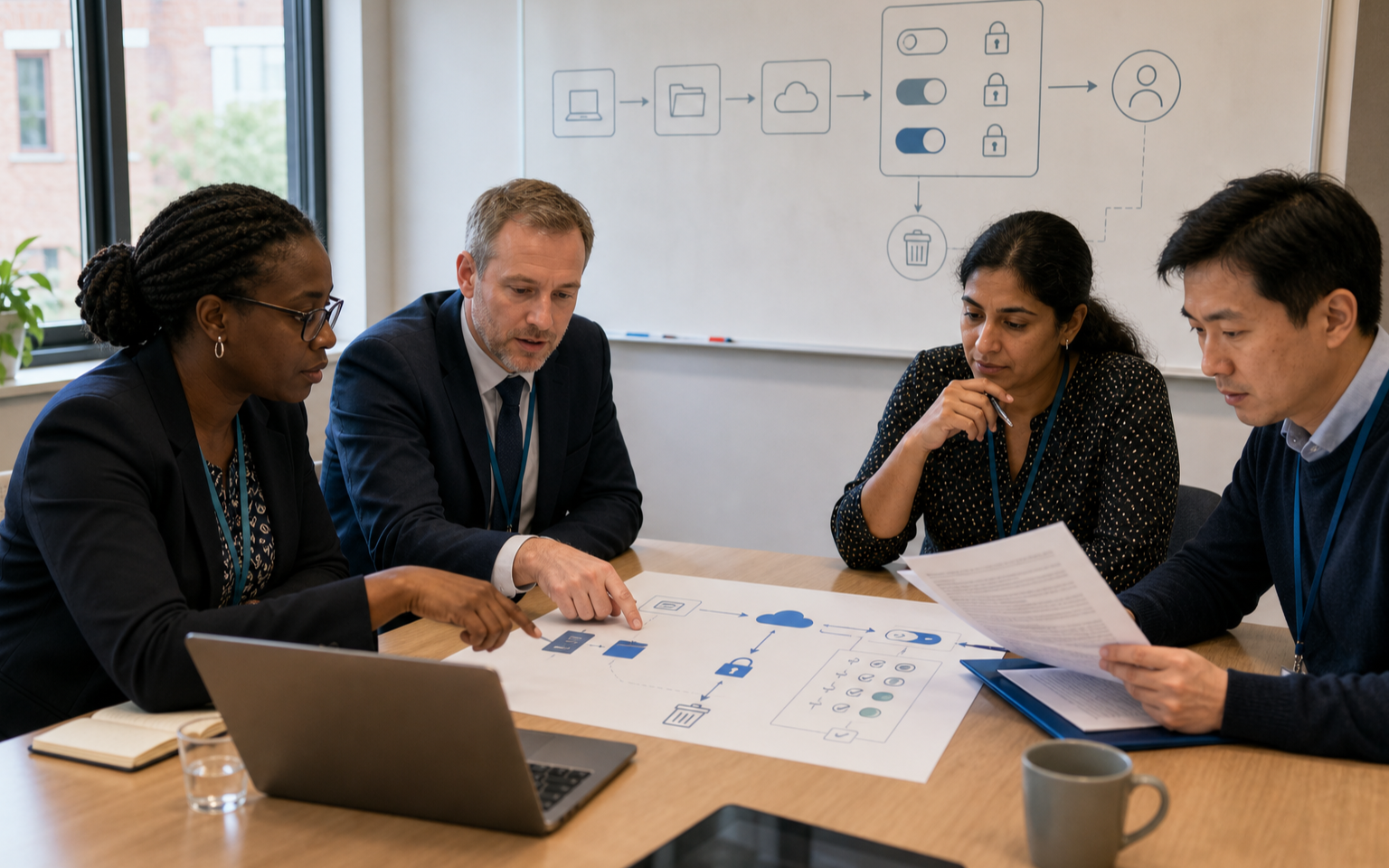
A diverse school procurement team reviews an educational AI contract, data-flow map and safeguarding checklist in a bright meeting room
Industry12 Jul 2026
Industry 79

Product news policy brief: England adds an AI-aware EdTech procurement checklist for schools

UK Department for Education

AI Policy and Learning Report

Product news policy brief: England's Department for Education added a school EdTech procurement section on July 9. It asks schools to map data flows, examine AI training and cross-border storage, involve data-protection and safeguarding leads, set contract and exit controls, and monitor products after purchase.

product newsEdTech procurementdata protection
Read 500-word summary
A diverse mathematics class works with an AI tutoring system while a teacher compares student reasoning and assessment evidence
Review2026
Review 74

Review of 12 studies finds promising mathematics-tutoring gains while generative-AI achievement evidence remains thin

Neo Molemane, Moeketsi Mosia, Felix O. Egara

Discover Education

A PRISMA systematic review screened 1,749 records and included 12 studies of AI tutoring and assessment in mathematics. Results were generally promising, especially for some lower-performing learners, but heterogeneous methods and limited direct achievement evidence for generative AI prevent a universal efficacy claim.

AI tutoringmathematics educationautomated assessment
Read 500-word summary
A diverse TESOL trainee team builds a meaningful multimodal teaching website while comparing human and AI contributions with their instructor
Journal Paper2026
Journal Paper 72

Hong Kong TESOL trainees used generative AI selectively across 10 multimodal website projects

Benjamin Luke Moorhouse, Christoph A. Hafner, Tsz Ying Ho

TESOL Quarterly

A qualitative study followed 22 volunteers representing 10 website projects in a Hong Kong MA TESL course. Every group used generative AI selectively, balancing efficiency and capability against authenticity, meaning-making, reliability and the amount of human involvement.

TESOL teacher educationmultimodal composinggenerative AI
Read 500-word summary