Back to Research News

#randomized experiment

randomized experiment

3 papers

Four diverse adults analyze a business problem with a laptop, charts and an unassisted written follow-up in a workforce-learning laboratory
Journal Paper2026
Journal Paper 54

Generative AI closed three quarters of an education-based performance gap during assisted work, but effort shaped what carried forward

Guillermo Cruces, Diego Fernández Meijide, Sebastian Galiani, Ramiro H. Gálvez, María Lombardi

arXiv working paper

In a preregistered randomized online experiment with 1,174 Argentine adults, GPT-4.1 assistance raised workplace-style problem-solving performance for both education groups and reduced the baseline gap from 0.548 to 0.139 standard deviations. Lower-education participants retained a modest gain after AI was removed, but stronger follow-up performance appeared when intensive assistance was paired with sustained human effort.

generative AIrandomized experimenteducation inequality
Read 500-word summary
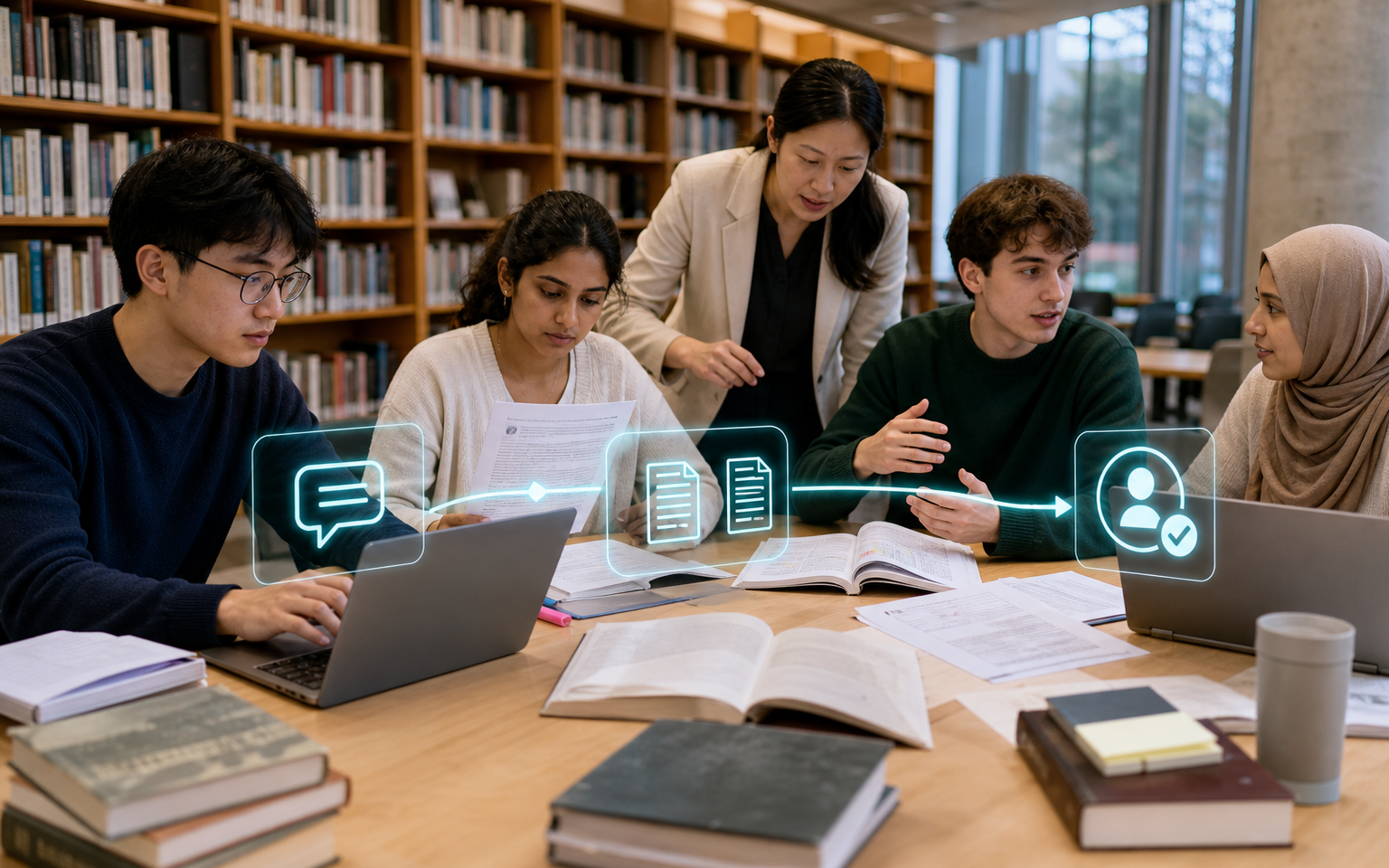
Four diverse university students practise prompting and source checking with an instructor at a library learning table
Journal Paper2026
Journal Paper 52

A 90-minute GenAI literacy course improved knowledge, prompting, source checking and self-efficacy across 65 university sections

Allison E. Connell Pensky, Lydia E. Eckstein, Michael C. Melville, Laura O. Pottmeyer, Zach Mineroff, Avi Chawla, Judy Brooks, Chad Hershock, Marsha C. Lovett

Computers & Education

In a large experiment involving 1,368 undergraduate and graduate students across 65 university course sections, a 90-minute asynchronous GenAI learning module improved knowledge of how the technology works, prompt-engineering performance, fact- and source-checking, and self-efficacy. It did not improve critical evaluation of bias, showing that short foundational training needs deeper practice for responsible judgment.

generative AI literacyrandomized experimenthigher education
Read 500-word summary
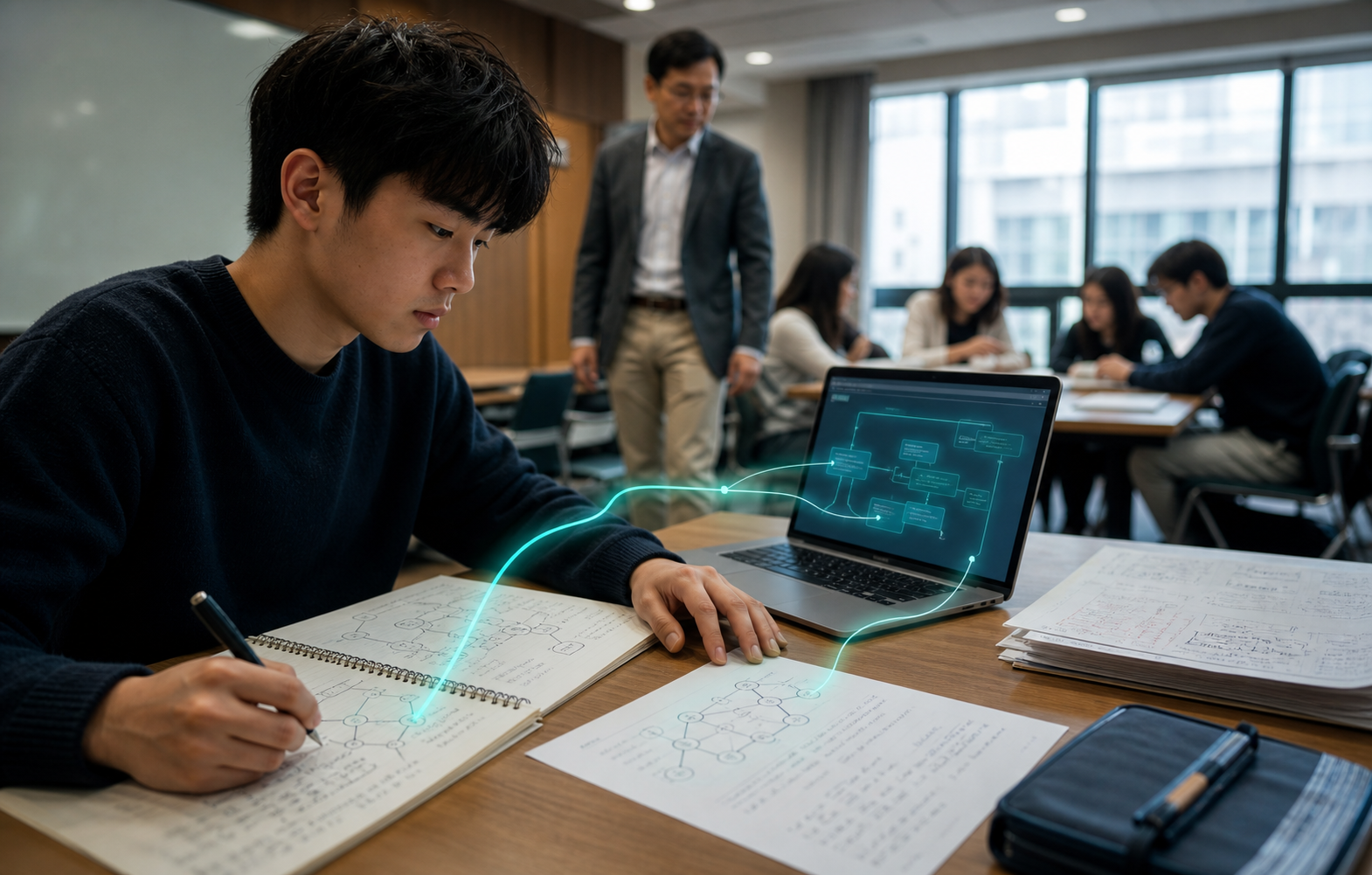
A university student compares an AI explanation with handwritten concept notes while an instructor and peers work in a seminar room
Journal Paper2026
Journal Paper 50

Experimental evidence on the learning impact of generative AI: gains persisted when students used it for explanation rather than automation

Zara Contractor, Germán Reyes

arXiv working paper

A randomized, proctored experiment reported that undergraduate access to off-the-shelf generative AI raised immediate factual and conceptual test performance by 0.27 standard deviations and that the gains persisted one week later. The working paper also finds a consequential usage pattern: students who used AI to explain concepts showed stronger delayed gains than students who used it to automate drafting.

generative AIrandomized experimenthigher education
Read 500-word summary